
Windows POS Hardware Manufacturing & OEM Solutions
For multi-location deployments, consistent hardware specifications and verified software compatibility help simplify installation, maintenance, and replacement planning. Before placing a bulk order, confirm the approved configuration, peripheral requirements, and applicable inspection and warranty terms.
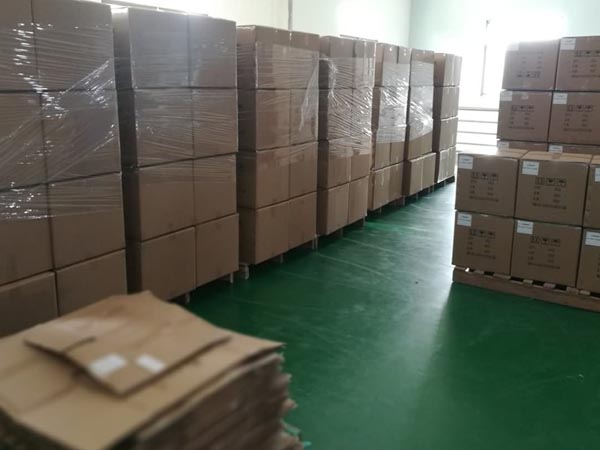
MINJCODE factory video
MINJCODE supplies POS machine for business applications where the selected terminal must match the required software, peripherals, and installation environment. Buyers can review the available Windows POS models and confirm the processor, memory, storage, display, operating system, and I/O configuration for each model.
For projects that require integrated printers, barcode scanners, customer displays, or other peripherals, confirm the supported configuration and interfaces before ordering. Availability depends on the selected model and project requirements.
Windows POS Terminal Models for Wholesale and Business Projects
Compare the available Windows POS terminal models before requesting a quotation. The right choice depends on the required screen configuration, processor performance, memory, storage, peripheral connections, and compatibility with your POS software.

|
Type
|
15.6 inch Windows All-in-One POS Terminal
|
|
Optional Color
|
Black/ White
|
|
mainboard
|
J4125
|
|
CPU
|
intel Gemini Lake J4125
Processor, four core frequency 1.5/2.0GHz,TDP 10W,14NM TDP 10W |
|
Memory Support
|
Supports D DR4-2133-/2400MHZ, 1 x SO-DIMM slot 1.2V 4GB
|
|
Hard Driver
|
MSATA,64GB
|
|
Liquid Crystal Display
|
EDP BOE15.6 Resolution: 1366*768
|
|
environment humidity
|
0~95% air humidity, no condensation
|
|
Touch Screen
|
Flat 10 point capacitor Taiwan Yili G+FF tempered panel A+ panel
|
|
system
|
Windows 10,Linux
|
|
I/O
|
DC_IN, VGA, COM, USB3.0, USB2.0,LAN,Lin_out, Lin_IN
|
|
Operating temperature
|
0~55 degrees
|
|
Storage temperature
|
-20~75 degrees
|
|
net opening
|
1*Realtek PCI-E bus RTL8106E/RTL8111H Gigabit NIC chip
|
|
WIFI
|
1*Mini-PCIE supports WIFI and 4G modules
|
|
USB
|
1*USB3.0 (I/O on the backplane) 3*USB2.0 seat son (I/O on the backplane) 2* Extended USB interface
|
|
audio
|
RealtekALC662 5.1 channel HDA encoder with MIC/ line out port support
|
|
power supply
|
DC12V
|
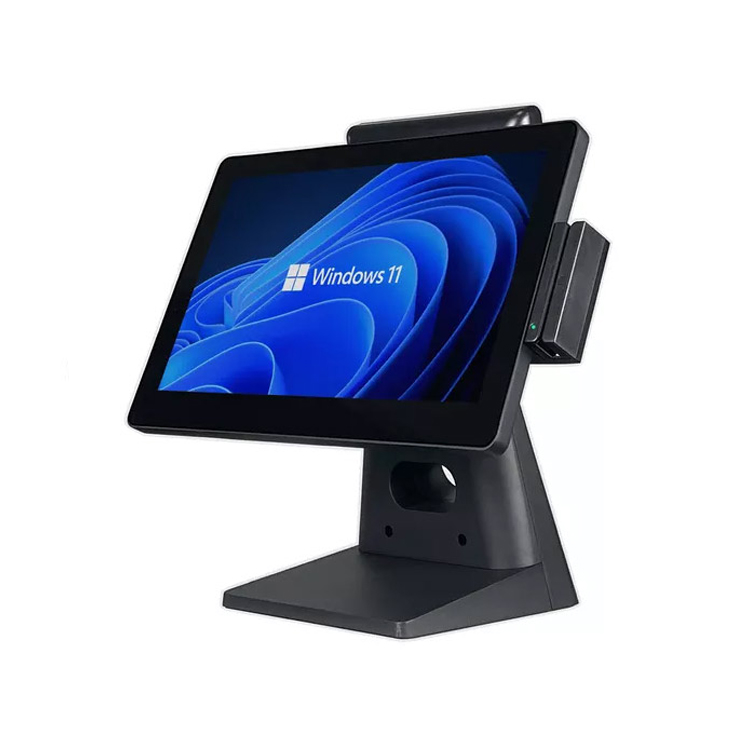
|
Type |
MJ POS1600 |
|
Optional Color |
Black |
|
Main Board |
1900MB |
|
CPU |
Intel Celeron Bay Trail-D J1900 quad core 2.0 GHZ |
|
Memory Support |
DDRIII 1066/1333*1 2GB(up to 4GB) |
|
Hard Driver |
DDR3 4GB (default) |
|
Internal Storage |
SSD 128GB (default) Optional:64G/128G SSD |
|
Primary Display& touch(default) |
15 inch TFT LCD/LED + Flat screen capacitive touch screen Second display(Optional) |
|
Brightness |
350cd/m2 |
|
Resolution |
1024*768(max) |
|
Built-in modual |
Magnetic card reader |
|
View Angle |
Horizon: 150; Vertical :140 |
|
I/O port |
1* power button; 12V DC in jack*1; Serial*2 DB9 male; VGA(15Pin D-sub)*1; LAN:RJ-45*1; USB(2.0)*6; RJ11; TF_CARD; Audio out*1 |
|
Compliance |
FCC Class A/CE Mark/LVD/CCC |
|
Packing dimension/ Weight |
410*310*410mm / 8.195 Kgs |
|
Operation System |
Windows7 |
|
Power adapter |
110-240V/50-60HZ AC power, Input DC12/5A out put |
|
Machine cover |
Aluminum Body |
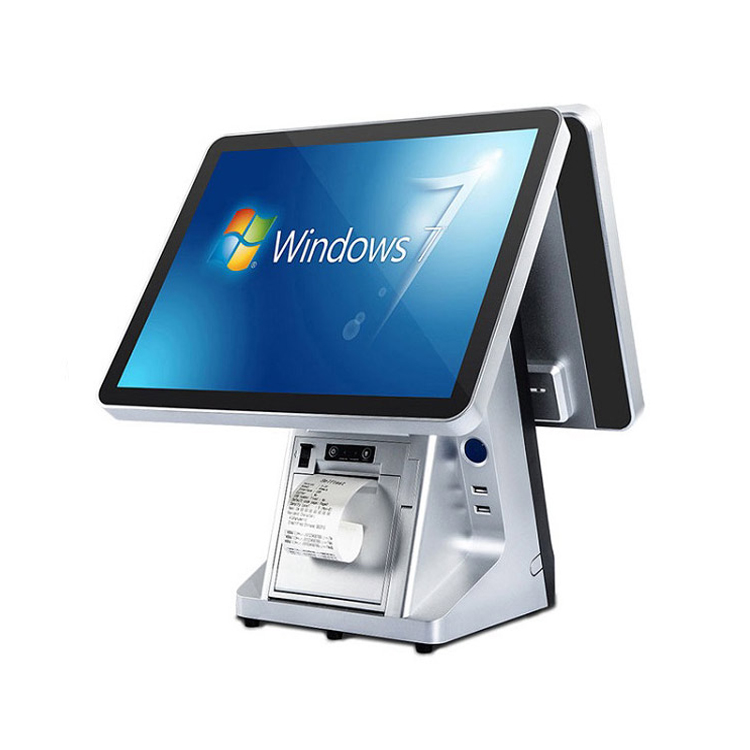
| Type | MJ POS7820D |
| Optional Color | Black/ White |
| Main Board | 1900MB |
| CPU&GPU | Intel Celeron Bay Trail-D J1900 quad core 2.0 GHZ |
| Memory Support | DDR3 2GB (default) Optional:4GB,8GB |
| Internal Storage | SSD 32GB (default) Optional:64G/128G SSD |
| Primary Display& touch(default) | 15 inch TFT LCD/LED + Flat screen capacitive touch screen |
| Second display(Optional) | 15 inch TFT / Customer Display (non touch) |
| VFD Display | |
| Brightness | 350cd/m2 |
| Resolution | 1024*768(max |
| Built-in Module | Built-in Thermal Printer: 80mm or 58mm |
| Support Optional | |
| WIFI, Speaker,Card Reader optional | |
| View Angle | Horizon: 150; Vertical :140 |
| I/O port | 1* power button 12V DC in jack*1; Serial*2 DB9 male; VGA(15Pin D-sub)*1; LAN:RJ-45*1; USB(2.0)*6; RJ11; TF_CARD; Audio out*1 |
| Operating temperature | 0ºC to 40ºC |
| Storage temperature | -20ºCto 60ºC |
| Compliance | FCC Class A/CE Mark/LVD/CCC |
| Packing dimension/ Weight | 410*310*410mm / 7.6 Kgs |
| OS | Windows7 beta version(default)/Windows10 beta version |
| Power adapter | 110-240V/50-60HZ AC power, Input DC12/5A out put |

|
Product Name
|
MJ POS7850
|
|
OS
|
Windows XP/7/8/10
|
|
DDR3
|
4GB/8GB optional
|
|
SSD
|
64/128/256GB optional
|
|
Touch Method
|
Capacity 10 point touch
|
|
Main Display
|
15.6 inch LCD/15 inch LCD
|
|
Customer Display
|
optional, VFD/15 inch LCD
|
Need help comparing models? Send us your target configuration, estimated quantity, destination country, and required delivery schedule. Our team can review the available options and confirm the specifications and commercial terms applicable to your project.
POS equipment Reviews
Lubinda Akamandisa from Zambia:I was looking for a POS system that would fully meet the needs of my small business, and this system is exactly what I was looking for. Its flexibility and scalability gives me confidence that my business can thrive as it expands. I sincerely appreciate the convenience and efficiency this system has brought to my business.
Amy snow from Greece:Choosing this POS system was one of the wisest decisions I've ever made. It not only improves our sales efficiency, but also helps us to better manage our inventory and analyze sales data. The stability and user-friendliness of this system impressed me so much that I have no hesitation in recommending it to other B2B sellers.
Pierluigi Di Sabatino from Italy:This POS system makes my sales team's work easy and fast. Its excellent customer management features have helped us better interact with our customers and improve customer satisfaction. It's definitely a wise investment for a small business like ours.
Atul Gauswami from India:We as a small business, are very happy with our choice of this POS system. Its excellent inventory management and sales reporting features have given us greater insight into our business operations, which has improved our efficiency and accuracy. We highly recommend it to other B2B sellers!
Jijo Keplar from United Arab Emirates:This POS system is truly a savior for my business! Its ease of use and powerful features make my transactions flow smoothly. The customer service team is always on hand to support me whenever I have a problem. I feel very satisfied and at ease with my choice.
angle Nicole from United Kingdom:This is a good purchasing travel, I got what I expired. That is it. My clients give all “A” feedback, thinking I would order again in the near future.

How to Choose a Windows POS Terminal for Bulk Orders
Selecting a Windows POS terminal for a bulk order requires more than comparing prices or screen sizes. Buyers should confirm software compatibility, hardware configuration, peripheral requirements, deployment conditions, and after-sales terms before approving an order.
1. Define the Software Requirements
Identify the POS application and confirm its supported operating system, CPU requirements, memory requirements, drivers, and connected peripherals. If the software provider specifies minimum and recommended hardware configurations, use those requirements as the basis for model selection.
2. Confirm the Required Hardware Configuration
Document the processor, RAM, storage, display, I/O ports, wireless connectivity, and optional modules required for the project. Do not assume that different configurations of the same model include identical components.
For example, an all-in-one POS terminal compatible with Windows may be worth evaluating when a project requires an integrated touchscreen and specific peripheral connections. Confirm the actual processor, memory, storage, operating system, and available interfaces against the current model datasheet before approving the configuration.
3. Test Peripheral Compatibility
List the receipt printers, barcode scanners, cash drawers, customer displays, payment devices, and other peripherals required for deployment. Confirm the connection method and software or driver requirements for each device.
4. Evaluate the Deployment Environment
Check the available counter space, mounting method, power supply, cable routing, ventilation, and access needed for maintenance. For multi-location projects, use a consistent installation specification.
5. Approve a Sample or Representative Configuration
Where available, evaluate a sample or representative unit using the intended software and peripherals. Record the approved configuration and document any required changes before confirming the bulk order.
Windows POS System Compatibility and Configuration
Before making a bulk purchase, please verify hardware compatibility; this is particularly important if the terminals will be deployed across multiple stores or integrated into an existing POS environment.
Before finalizing your configuration plan, please verify the following:
· Operating System: Confirm the specific Windows versions supported by the selected models. For long-term deployments, evaluate the operating system’s support lifecycle and security update requirements.
· POS Software: Verify the software’s requirements for CPU, memory, operating system, drivers, and peripheral devices.
· Peripheral Device Connectivity: Confirm the number and types of required interfaces (e.g., USB, Wi-Fi, display ports, etc.).
· Integrated Devices: Based on your specific situation, verify the requirements for printers, scanners, customer display screens, payment terminals, and other relevant devices.
· Deployment Environment: Assess the installation space, power requirements, ventilation conditions, cable routing, and ease of maintenance.
If you already use a POS application, provide its name, supported operating system, peripheral list, and required interfaces. These details help identify which hardware configuration needs further compatibility review.
Windows POS Hardware Compatibility Checklist
Before approving a Windows POS terminal for your project, check the complete hardware and software setup rather than the terminal alone.
|
Compatibility Area |
Questions to Confirm |
|
POS software |
Does the application support the selected Windows edition and version? |
|
CPU and memory |
Does the hardware meet the software provider's minimum and recommended requirements? |
|
Drivers |
Are the required drivers available for the operating system and connected devices? |
|
Receipt printing |
Is the printer integrated or external, and does the software support the selected printing method? |
|
Barcode scanning |
Which interface and scanning mode does the application require? |
|
Cash drawer |
Is a compatible connection available through the printer or another supported interface? |
|
Customer display |
Is a second screen required, and does the selected model support it? |
|
Network connectivity |
Are the required Ethernet or wireless connections available? |
|
Payment devices |
Does the payment provider support the selected device, connection method, and regional configuration? |
|
Deployment and support |
Are installation, replacement, warranty, and maintenance requirements documented? |
What Information Should You Send for a Compatibility Review?
Provide the POS software name and version, operating system requirements, list of connected peripherals, required ports, target model, and estimated quantity. If you already have a hardware specification from your software provider or system integrator, include it with your inquiry.
Compatibility must be confirmed for the actual combination of terminal hardware, operating system, drivers, peripherals, and POS application. A Windows-based terminal does not automatically guarantee compatibility with every Windows POS application.
Why Evaluate MINJCODE for Your Windows POS Project?
Hardware Configuration Review
Review the processor, memory, storage, operating system, display, and I/O interfaces for each shortlisted model. For projects using existing POS software or peripherals, confirm the technical requirements before approving the configuration.
OEM/ODM Project Coordination
Discuss available branding, packaging, hardware configuration, and other customization requirements with the MINJCODE team. Customization options depend on the selected model, component availability, and order requirements.
Product and Supplier Documentation
Request the current datasheets, applicable product compliance documents, and written configuration details needed for your procurement review. Confirm that the documents correspond to the model and configuration under consideration.
Order and After-Sales Terms
Before placing an order, confirm the applicable lead time, warranty coverage, inspection arrangements, packaging, shipping terms, and after-sales procedures for the selected model and quantity.

Windows POS Terminal OEM/ODM Customization Services
Distributors, brand owners, and equipment manufacturers should first agree on customization requirements before finalizing production configurations. Specific options depend on the selected model, component configuration, and order requirements.
MINJCODE can discuss various project requirements with you, such as:
· Brand logos and packaging solutions
· Processor, memory, and storage configurations
· Touchscreen sizes and customer display options
· Peripheral modules and interface requirements
· Customization of the device’s appearance or color (depending on the specific model)
· Project-specific documentation and packaging requirements
Learn more about our OEM/ODM manufacturing services.
How to Start an OEM/ODM Project
1.Share the target application, required specifications, and estimated quantity.
2.Identify the requested branding, hardware, appearance, or packaging changes.
3.Ask MINJCODE to confirm feasibility, applicable MOQ, costs, and lead time.
4.Review the proposed configuration and available samples before approving the order, where applicable.
For a project review, provide your target model, customization list, quantity, destination market, and required delivery schedule.

Verifying Factories and Suppliers
When selecting a POS hardware supplier, you should not make a decision based solely on product images or brief specifications. Before finalizing a large order, your team should verify the production and commercial information relevant to the project.
MINJCODE is happy to discuss applicable product specifications, customization requirements, inspection arrangements, and order terms with qualified buyers.
When evaluating suppliers, please request or review the following materials as appropriate:
· The latest product data sheets and detailed specifications for each model
· Product certification documents, along with the specific models or product lines covered by each certificate
· Factory overview and information on production processes
· Sample evaluation arrangements
· Warranty terms and after-sales service terms
· Written confirmation of the agreed-upon configuration
Supplier Information for B2B Buyers
Before selecting a Windows POS supplier, confirm the available models, specification records, customization scope, applicable compliance documents, and written commercial terms.
For repeat orders, also clarify how the approved configuration will be maintained, how component substitutions are handled, and what warranty and after-sales procedures apply.
Visit our factory tour and company certification page to review the available company and compliance information. Request model-specific documents when evaluating a particular configuration.
Terms for Windows POS Procurement
Commercial conditions should be confirmed against the specific model and order rather than assumed to be identical across all configurations.
|
Purchasing item |
What to confirm with MINJCODE |
|
MOQ |
MOQ for the selected model and any customization |
|
Sample order |
Availability, sample configuration, cost, and shipping responsibility |
|
Bulk order |
Quantity breaks and the applicable quotation terms |
|
Lead time |
Current stock status, production schedule, customization time, and shipping arrangements |
|
Payment terms |
Accepted payment method and agreed payment schedule |
|
Warranty |
Period, coverage, exclusions, and claim process |
|
Packaging |
Standard packaging, branding, and any additional requirements |
|
Shipping |
Destination, shipping method, delivery terms, and responsibility for import charges |
|
Documentation |
Datasheets, packing documents, and applicable compliance documents |
For an accurate quotation, provide the target model or specifications, quantity, destination country, required delivery date, and any OEM/ODM requirements.
Windows POS machine applications
Windows POS terminals can be considered for retail, hospitality, and service environments when the selected hardware meets the software, peripheral, and installation requirements of the application.
1. Retail and Supermarkets
It is necessary to evaluate barcode scanner connectivity, receipt printing, cash drawer interfaces, customer displays, and the compatibility of the equipment with retail POS applications. For multi-store deployments, standardized, approved hardware configuration standards and equipment replacement requirements should be established.
For projects that need a customer-facing display, buyers can also evaluate a dual-screen POS terminal for retail projects. Confirm whether the second display is optional or included in the quoted configuration.
2. Food Service and Hospitality
It is necessary to confirm counter layout, ordering workflows, receipt printing, peripheral device connections, and compatibility between the equipment and food service or hospitality management software. The suitability of terminal devices depends on the specific application scenario and the required interface types.
For restaurant deployments, review the touchscreen POS terminal for restaurant projects alongside the required ordering software, receipt printing workflow, and peripheral connections.
3. POS Solution Providers and System Integrators
For solution providers, key considerations include: hardware specifications, software compatibility, interface requirements, the reproducibility of configurations, and the ability to document approved hardware configuration schemes to facilitate future deployment and technical support.
4.Hospitality
In hotels and resorts, Windows dual screen POS can be integrated with property management systems for check-in, billing and service management.
Have a Special Requirement?
Have a Special Requirement?
Generally, we have common windows pos machine products and raw materials in stock. For your special demand, we offer you our customization service. We accept OEM/ODM. We could print your Logo or brand name on pos machine body and color boxes. For an accurate quotation, you need to tell us the following information:
FAQs for windows pos machine
Compatibility depends on the exact hardware configuration, operating system, drivers, software requirements, and peripheral connections. Provide your software environment and required peripherals so compatibility can be reviewed before ordering.
Start by confirming the required operating system, processor, memory, storage, display, interfaces, peripherals, and POS software requirements. For repeat orders, also confirm the approved configuration, inspection scope, warranty terms, and change-control process.
Confirm the warranty period, coverage, exclusions, fault-reporting process, troubleshooting responsibilities, and repair or replacement arrangements for the selected model before placing an order.
MINJCODE's Windows POS page is intended for B2B sourcing and OEM/ODM inquiries. Available models, order quantities, and commercial terms should be confirmed with the team for your specific requirements.
Branding and other customization options depend on the selected model and project scope. Confirm logo placement, packaging, supported hardware changes, minimum order conditions, and any associated approval process before production.
Most Windows POS machines need to be connected to the Internet for real-time updates, transaction processing, and remote management.
Other POS equipment


Unique Features of Windows POS machine

Why is Windows-based retail POS hardware so popular?
Among numerous operating systems, Windows remains the most popular choice for retail POS hardware. Here are several key reasons for its popularity:
· Ease of use: Most employees are familiar with the Windows system, enabling quick adoption and reducing training time and costs. Additionally, many POS software solutions run well on Windows, meeting user needs.
· High-performance hardware: Windows-based POS system typically features powerful processors , large RAM capacities (up to 32GB), and SSD storage (1TB or larger), enabling swift processing of high-definition product images and videos.
· Security: Microsoft regularly updates Windows systems to enhance security. Windows 11 introduces multiple security features, such as application control and credential protection, providing robust safeguards for businesses.
· Extensive Selection: Due to Windows' widespread adoption, numerous high-quality retail POS hardware manufacturers offer diverse solutions that balance high performance with cost-effectiveness.
Operating system availability varies by model and configuration. Confirm the exact Windows edition, version, driver support, and lifecycle requirements for your intended deployment before ordering. For long-term commercial projects, evaluate the operating system's security-update policy and compatibility with your POS application.

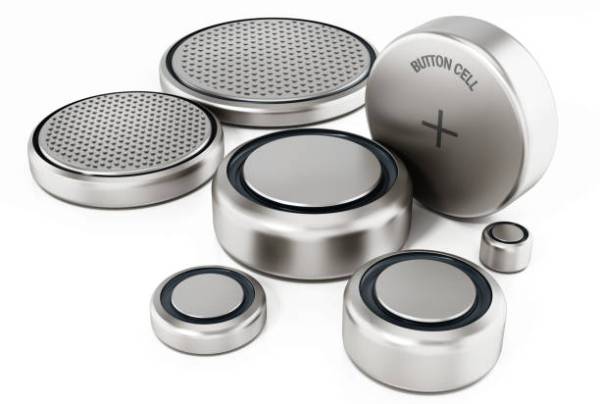
Why are button batteries included in the POS?
Data Persistence: Coin cell batteries are often used to hold data in the system memory to ensure that important information such as transaction history, settings and configurations will not be lost in the event of a power outage or brownout, thus guaranteeing data integrity after a reboot.
Accurate Time Recording: Some POS machines require that the time and date be maintained accurately in order to properly record transaction times. Coin cell batteries provide continuous power, ensuring that the system clock is not affected by power interruptions and that time recording remains accurate.
Portability and Stability: In mobile POS systems, coin cell batteries can be used as a backup power source to ensure that the equipment continues to operate without external power, especially for applications such as on-site customer checkout, providing flexibility and portability.
Compact design: Due to the integrated technology, coin cell batteries can provide the required power in a compact size, which makes them one of the common power solutions in POS, providing reliable power support for devices in limited space.
Besides button batteries, what other types of batteries are commonly used in POS machines?
1.Lithium-ion batteries:
Widely used in mobile POS systems, they offer high energy density and long-life charge cycles. Their lightweight design makes them ideal for portable devices.
2.Lithium Polymer Batteries:
Similar to Li-ion batteries, but with a thinner design and more flexible shape for space-constrained mobile devices, providing reliable energy support.
3.NiMH batteries:
Compared to Nickel Cadmium (NiCd) batteries, NiMH batteries offer higher energy density and environmental friendliness, and are suitable for some POS and portable devices, providing reliable power support for the devices.
4.Lead-acid batteries:
Although not as common as lithium batteries in POS systems, lead-acid batteries may be used for backup power in some cases where capacity is required. This option is particularly suitable for some specific application scenarios.
5.Rechargeable battery packs:
Some POS may utilize removable battery packs for easy replacement or upgrading. These battery packs usually contain multiple individual cells to meet the high power demand of the device and ensure stable operation for a long period of time.