

1.What is Auto-Sensing Mode?
In 2D barcode scanners, Auto-Sensing Mode is a mode of operation that automatically identifies and triggers a scan using an optical or infrared sensor without the need to press a scan button. It relies on the scanner's built-in sensor technology to automatically detect and scan the target barcode.
2.Roles and Advantages of Auto-Sensing Mode Auto-Sensing Mode has the following roles and advantages:
2.1. Increased work efficiency:
Auto-sensing mode eliminates the need to manually press the scan button for each scan, speeding up scanning and increasing work efficiency.
2.2. Reduced hand fatigue:
During long periods of continuous scanning, manually pressing the scan button can cause hand fatigue. In Auto-Sensing mode, the scanner automatically detects and triggers the scan, reducing hand fatigue.
2.3. Improved accuracy:
Auto-sense mode uses sensor technology to more accurately identify the target barcode and trigger the scan precisely, reducing the chance of a false scan.
2.4. Convenient to use:
With auto-sensing mode, users do not need to manually operate the scan button, but simply place the target barcode within the scanner's scanning range and the scan is completed automatically, simplifying the operation process.
2.5. Widely applicable:
Auto-sensing mode can be applied to a variety of scanning scenarios, whether it is a reception desk, warehouse or retail store, etc. Auto-sensing mode can be used to improve work efficiency.
This is an introduction to the Auto-Sensing mode of the 2D barcode scanner, and further information on why you should choose the Auto-Sensing mode for your handheld 2D barcode scanner is provided below.
If you have any interest or query during the selection or use of any barcode scanner, please Click the link below send your inquiry to our official mail (admin@minj.cn) directly! MINJCODE is committed to the research and development of barcode scanner technology and application equipment, our company has 14 years of industry experience in the professional fields, and has been highly recognized by the majority of customers!
3.Why choose auto-detect mode for handheld 2D barcode scanners?
3.1. Applicable scenarios:
Auto-sensing mode is suitable for scenarios where frequent scanning is required. Retail, logistics and warehousing, healthcare and manufacturing can all benefit from Auto-Sensing mode. In retail, for example, it can improve efficiency and reduce workload by eliminating the need to manually press buttons to quickly scan large quantities of merchandise.
3.2. Increased labour efficiency:
Auto-sensing mode enables automatic scanning using sensor technology, greatly increasing labour efficiency. Operators simply place a 2D barcode within the scanner's scanning range without having to manually trigger the scanning action, and the scanner automatically recognises the barcode and completes the scan. This saves time and reduces the number of steps in the scanning process, increasing overall efficiency.
3.3. Reduced error rate:
Auto-detect mode improves the accuracy of barcode scanning, reducing the error rate. The sensor accurately identifies the barcode and ensures that the scan is triggered in the correct position, eliminating the potential for mishandling that can occur with manual operations. In addition, Auto-Sensing Mode can be combined with decoder software to automatically correct skewed or blurred barcodes, further improving scanning accuracy.
3.4. Convenience and ease of use:
Auto-sensing mode is very easy to use, no need to press the scan button, just hold the barcode close to the scanner and scan. This operation is much more convenient, especially in busy working environments, and can greatly simplify the scanning process, improving efficiency and user experience.
In summary, the choice of auto-sensing mode for handheld 2D bar code scanners can be adapted to a variety of scenarios and can play an important role in improving efficiency, reducing error rates and providing convenience.
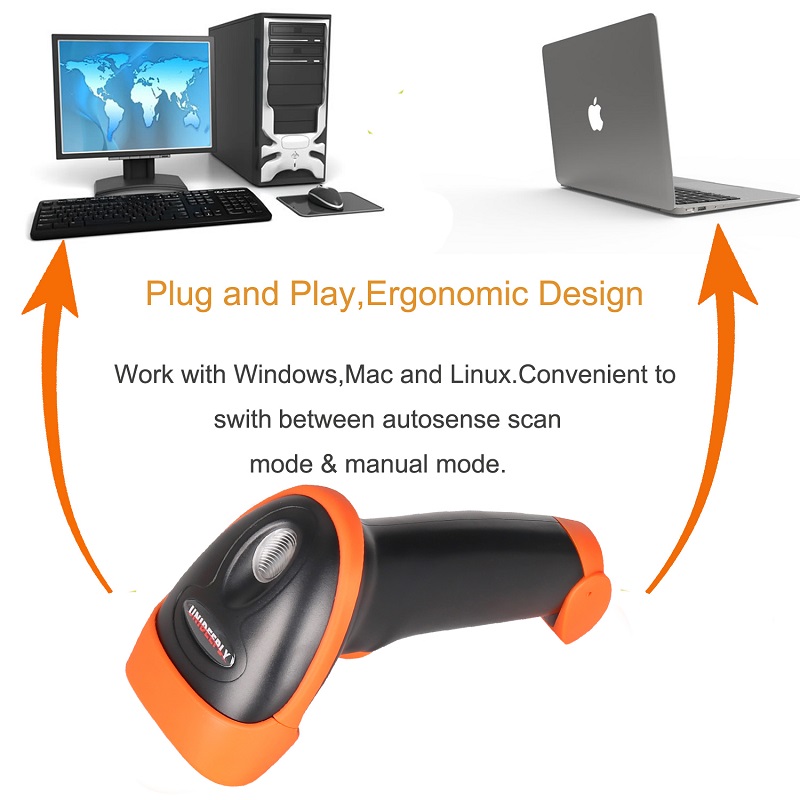
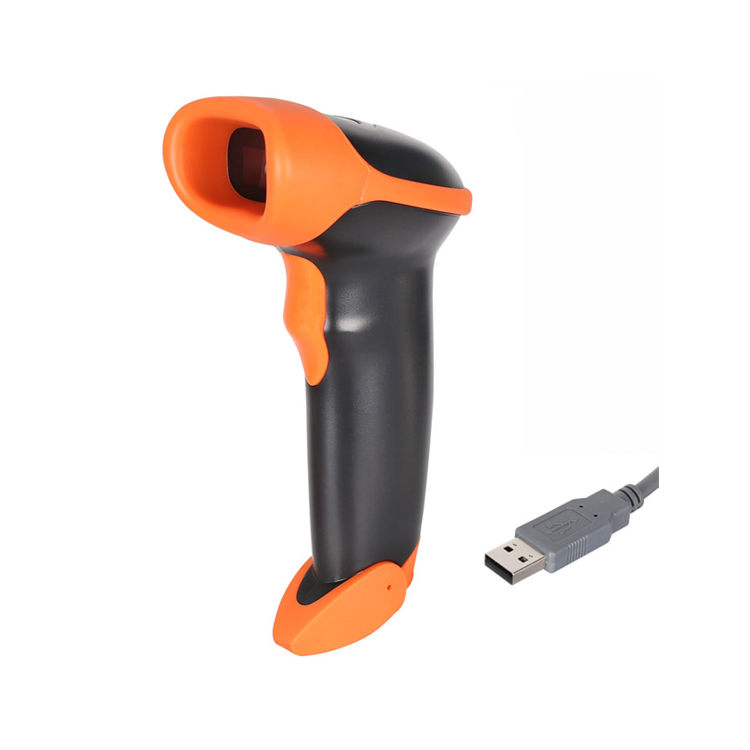
4.For most bar code scanners, the steps to set up automatic scanning mode are usually as follows:
Step 1: Locate the manual
Locate the User Guide that came with your scanner. These documents usually contain detailed instructions and procedures for setting up the scanner.
Step 2: Scanning in autosensing mode
Locate the autosensor in the manual and scan the autosensor barcode.
Step 3: Test your settings
Once the scan is complete, the scanner will automatically enter autosensing mode. By placing a 2D barcode within the scanner's scanning range, the scanner will automatically detect and scan the barcode without the need to press the scan button. Test to make sure the auto-sensing mode is working correctly.
Please note that different brands and models of scanners may have slightly different setup procedures and specific operations. Therefore, it is important that you understand and follow the scanner's specific instructions before performing the above steps.
5.Common problems and solutions
1. What if the auto-sensing mode does not work?
5.1.Make sure the scanner's Auto Scan mode is set correctly. Refer to the manual or user guide to find out how to set the autosensing mode.
5.2.Check the power and connections. Make sure the scanner is properly powered and connected to the PC or other device.
5.3. Clean the scanner's scan window or lens. If the scan window or lens is dirty, it may affect the proper operation of the automatic scanning. Gently clean the window or lens with a cleaning cloth or special cleaner.
5.4. Try restarting the machine. Sometimes restarting the machine can clear a temporary error.
2. Can Auto Scan barcode scanners read all types of barcodes?
Auto Scan barcode scanners are designed to read a variety of barcode symbologies such as UPC, EAN, QR Codes, Data Matrix, etc. However, the ability to scan specific barcode types may vary depending on the scanner model and its specifications. It is recommended that you check the scanner's compatibility with the desired barcode format before purchasing.
3. Can Auto Scan barcode scanners be connected to other equipment?
Many Auto Scan barcode scanners come with wireless connectivity options such as Bluetooth or Wi-Fi, allowing them to be easily connected to a computer, smartphone, tablet or point of sale (POS) system. This enables real-time data transfer and seamless integration with existing software systems.
Overall, the trend towards automatic scanning in 2D barcode scanners will continue as technology advances. The future development of automatic sensing in 2D barcode readers will focus more on efficiency, accuracy and convenience to meet changing market needs and new application scenarios. At the same time, it will also integrate with other technologies to achieve richer functionality and a better user experience.
If You Are in Business, You May Like
Recommend Reading
Post time: Jun-25-2023